Building a sustainability plan has been a work in progress at The LEGO Group for years.
Cedric Roose, Country Manager for LEGO New Zealand, says the maker of the iconic children’s plastic construction toys says it hopes to have all its plastic bricks made from sustainable material by 2030.
“We have a little way to go, but there has been some promising progress,” Cedric says from his Level Four B:HIVE office.
A 2018 pilot project first produced some LEGO elements out of sugar cane. But they were non-structural elements like trees and leaves that appear in some LEGO sets.
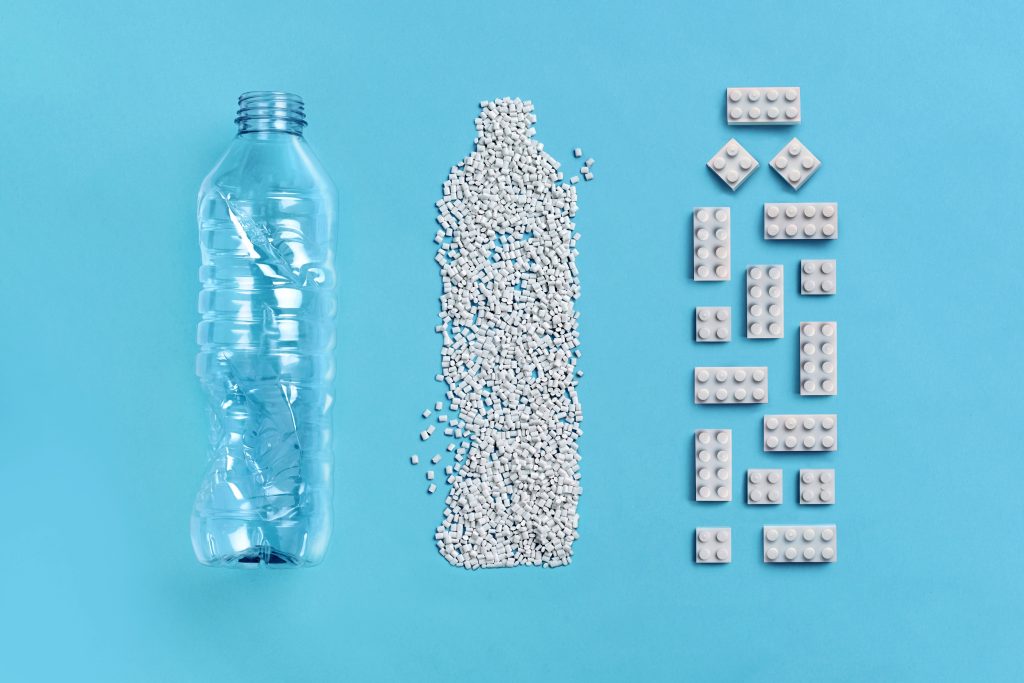
“They looked good and felt good, but they didn’t have the strength for our construction pieces.” Then just over a year ago, The LEGO Group unveiled a prototype brick using PET plastic from discarded bottles – the first brick made from a recycled material to meet the company’s strict quality and safety requirements.
Materials scientists and engineers spent three years testing more than 250 variations of PET materials and hundreds of other plastic formulations. The result is a prototype that meets several of their quality, safety and play requirements – including clutch power.
“Clutch power refers to the strength of the bricks when joined together and how easy they are to click together and pull apart,” Cedric says.
On average, a one-litre plastic PET bottle provides enough raw material for ten 2 x 4 LEGO bricks. However, the bricks are still at an opaque colour stage and Cedric says the team is now figuring out how to make them the iconic LEGO colours.
Meanwhile The LEGO Group has also focused on getting rid of single plastic bags – from carrier bags to those found in LEGO boxes – and replacing them with paper. It has also set a target to reduce the company’s carbon emissions by 37% by 2032.
“We can have an impact for the future,” Cedric says. “The LEGO Group has a vision and a sustainability mission.”