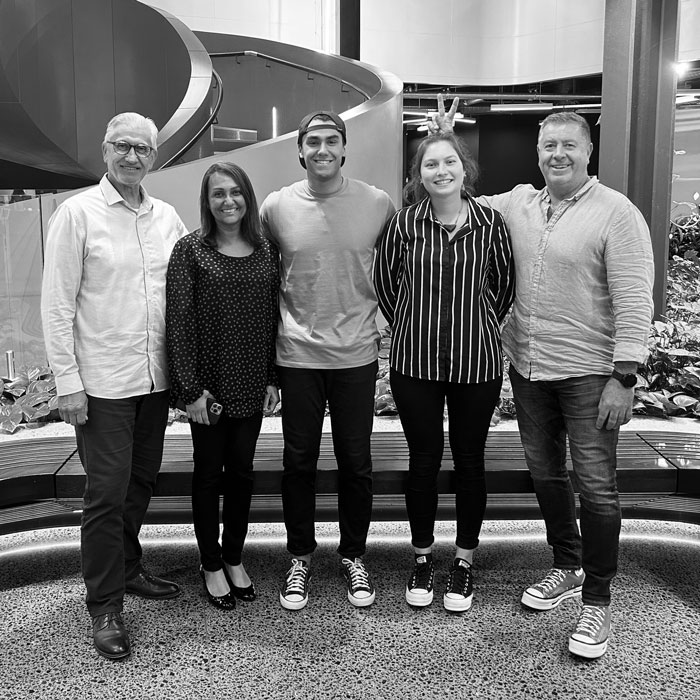
When Ariel Metekingi called his friend Marsden Hulme in Australia a few years back and asked him if he would come home and help his people, he said yes. The result was Hapū Ora.
Marsden, who is of Ngapuhi and Waikato-Tainui descent had been working with global organisations in the UK, US and Australia and the timing was right. He was ready to bring his commercial background back home and use it to advantage.
The friends founded Kaupapa Māori organisation Hapū Ora, based on level 1 of the B:HIVE.
Their approach is both caring and practical. “On one hand we are very much socially driven, but we are also a mix of social and commercial,” says Marsden. “It’s a logical handshake.”
Hapū Ora provides 12 home care sites throughout NZ, with the B:HIVE as their head office, focusing on returning mainly but not exclusively Māori tamariki and rangatahi to their whanau. These young people had previously been removed from their families by various organisations. This home care is supported by a recruitment arm which has relationships with the likes of Fulton Hogan, Downer, G.J Gardener Homes and some telcos, as well as mining companies in Australia. Getting rangitahi into employment is a crucial part of the process.
The skill sets Marsden and Ariel bring to Hapū Ora are immense. Marsden’s experience encompasses Operations, BPO (Business Process Outsourcing), Workforce Management and Contact Centre Operations. His entrepreneurial ventures include consumer electronics, telecommunications, and renewable energy.
Ariel, (Ngati Toa Rangatira,Ngai Tahu, Ngati Koata, Ngati Tahu Ngati Whau, Ngati Pikiao Te Ata haunui a Paparangi, Ngati Tuwharetoa, Ngati Ngat Ata) has served on the Tainui Māori Trust Board. More recently he worked as a management consultant in New Zealand, Australia, and the USA, advising businesses on entering new markets and building international networks.
Hapū Ora works differently to other organisations. “Our point of difference is that we are caring at a broader level, by reaching into homes to try to help whanau have a better life through employment opportunities,” Marsden says.
“One of things we have learned, is that many whanau are returning kids on a benefit, so it’s a real struggle to feed another mouth. While the aspiration of sending kids back is noble, from a practical point of view it is difficult. When we talk to Iwi we are able to talk about employment for rangatahi to help the whanau.”
The organisation is government funded and has partnerships with Oranga Tamariki, DHBs, Mental Health Services and other specialists.
There are currently 25 kids in Hapū Ora’s care across the country from Invercargill to Auckland. Some of their centres, which are mainly family homes, are owned by Oranga Tamariki or Hapū Ora. Seventy percent of all kids in care are of Māori descent. And Hapu Ora is seeing kids younger and younger and with more complex trauma.
“Our job is to reset that trauma working closely with other services, no one group has all the answers,” he says.